











When More Advice Makes Choosing Harder
There has never been a shortage of people willing to tell us what to do. What has changed is the volume.
A difficult decision can now produce an almost endless stream of podcasts, books, expert opinions, social media commentary, online communities, and artificial intelligence generated answers. Access to information can be enormously useful. Yet having more answers available does not necessarily make the act of choosing any easier.
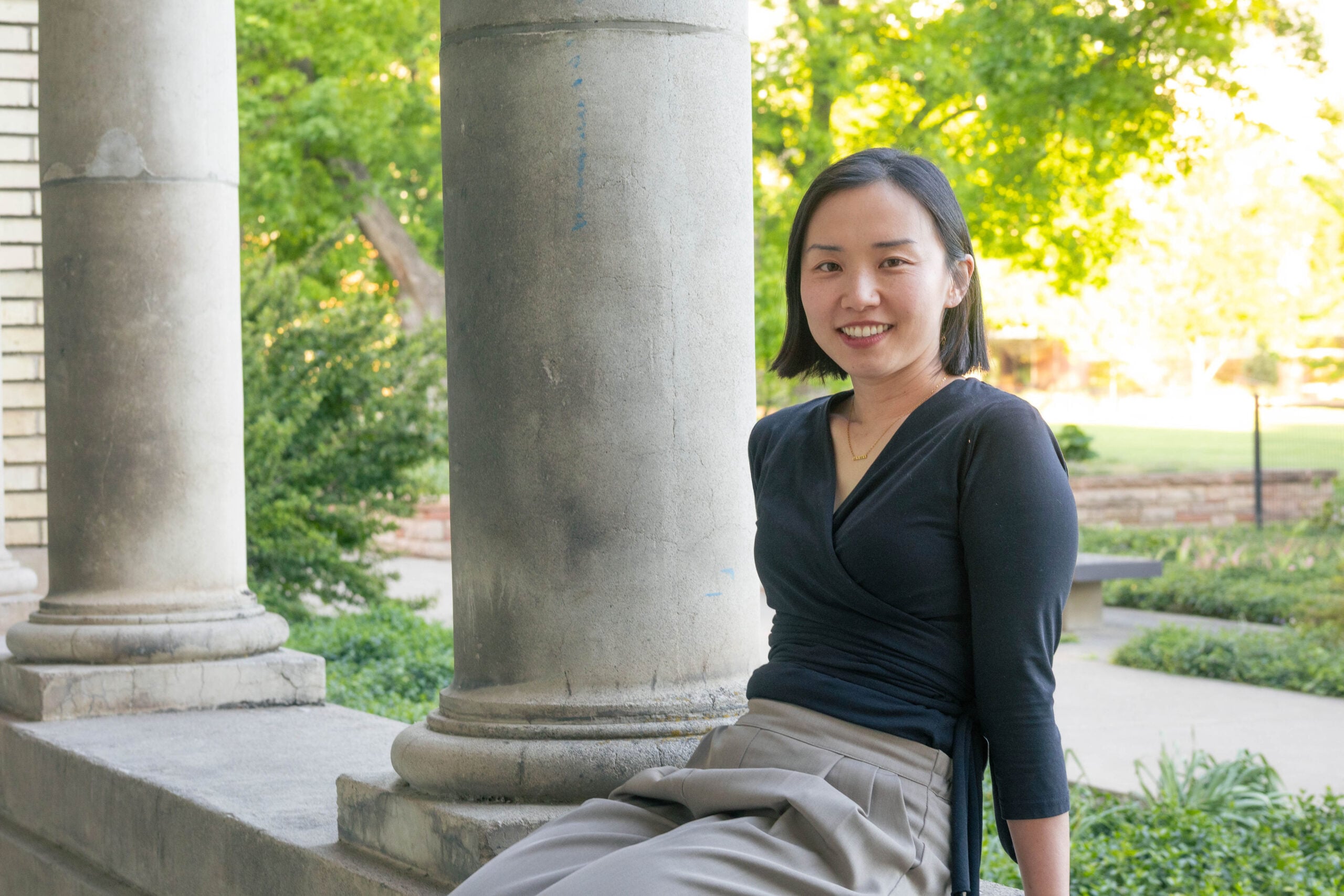
Hana Robison has a name for what can happen when that search goes too far: “outsourced authority.”
It describes the tendency to rely so heavily on external advice and validation that capable people begin to lose confidence in their own judgment. The problem is not seeking guidance, Robison argues. It is reaching a point where gathering another opinion becomes easier than making the decision.
“We’ve become incredibly good at finding answers, but having more answers doesn’t automatically make us better at choosing,” Robison says. “Self trust isn’t believing you’ll always make the right decision. It’s knowing how to gather information, discern what matters, and trust yourself enough to move forward without constantly outsourcing your authority.”
That idea is becoming the foundation of Robison’s expanding speaking and coaching business.
Building an Inner Compass
Robison formally launched her business in August 2026 in Galveston, Texas. She is now expanding nationally through personalized coaching, speaking engagements, workshops, and partnerships with universities, organizations, conferences, and professional communities.
At the center of the work is her Inner Compass Method, a personalized framework focused on self trust, discernment, and decision making.
The method asks people to look closely at the patterns influencing their choices. Some may be relying on expectations they absorbed years earlier. Others may have become accustomed to checking every instinct against an outside opinion before acting.
Robison’s aim is not to persuade people to ignore expertise. Quite the opposite. Discernment requires knowing how to gather useful information while remaining capable of deciding what deserves weight.
That distinction has become increasingly central to her work.
Three Conversations Around the Same Problem
Robison is developing the business around three related areas.
The first is leadership and burnout. Leaders regularly make decisions without perfect information, often while managing competing expectations. Robison’s work examines how self trust can help them respond with greater clarity rather than becoming trapped in repeated second guessing.
The second centers on what she calls the “Advice Generation,” people navigating an unusually dense environment of information, recommendations, and outside voices. The question Robison raises is simple but consequential: At what point does seeking more guidance stop helping?
Her third focus is personalized coaching for women who are ready to make decisions and move forward without needing constant external validation.
Different audiences may enter the conversation for different reasons, but the underlying skill remains the same. Information has to be interpreted. Eventually, someone has to choose.
A Speaking Career That Started Early
Although Robison’s business formally launched in 2026, speaking has been part of her life for more than two decades.
She began addressing audiences at age 11 and later earned a B.A. in Rhetoric from UC Berkeley. She is also a certified life coach, with experience spanning education, leadership, coaching, faith based environments, and community speaking.
Over the years, Robison has spoken before audiences of several hundred in educational, faith based, coaching, and community settings. Her background eventually converged with the questions that now define her professional work: Why do capable people stop trusting themselves? How can discernment be developed? And how does someone know when enough information is actually enough?
The Inner Compass Method grew from those questions.
Learning to Choose Without Perfect Certainty
Robison’s perspective leaves room for something that conversations about confidence sometimes miss: good decision making does not guarantee a good outcome.
People can gather information carefully, listen to experienced voices, consider the consequences, and still make a choice that does not unfold as expected.
Self trust, as Robison defines it, is not certainty that a person will always be right. It is the ability to participate fully in the decision rather than handing that responsibility to someone else.
That makes her message relevant beyond moments of personal transition. It reaches into leadership, entrepreneurship, education, and any environment where people must filter an abundance of information and eventually decide what matters.
The challenge is no longer simply finding an answer. For Robison, the more interesting work begins when people learn how to choose among them.
Learn More
To learn more about Hana Robison, the Inner Compass Method, personalized coaching, speaking engagements, and workshops, visit hanarobison.com or follow her on Instagram at @hanarobison_.