













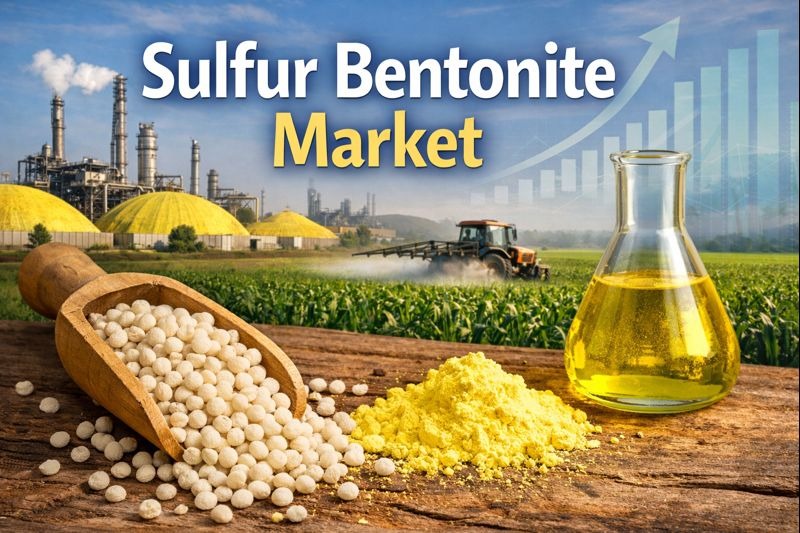
The global agricultural landscape is undergoing rapid transformation as farmers and policymakers focus on boosting crop productivity, enhancing soil fertility, and meeting the food demands of a growing population. Nutrient deficiencies in soil, particularly sulfur deficiency, have become increasingly common due to evolving farming practices, reduced atmospheric sulfur deposition, and higher crop intensity. As a result, the need for fertilizers that replenish essential nutrients is greater than ever, and sustainable soil management has become a top priority across major farming regions worldwide.
The Sulfur Bentonite Market has emerged as a crucial component of this shift toward nutrient-rich and sustainable agricultural inputs. Valued at USD 144.8 million in 2023, the market is projected to grow steadily and reach USD 224.4 million by 2032, reflecting a CAGR of 5.0% during the forecast period of 2024–2032. This growth is driven largely by the rising awareness of sulfur’s role in crop development and the increasing use of sulfur-enhanced fertilizers to address widespread sulfur deficiency. As sulfur bentonite decomposes in soil, it gradually releases sulfur in a form that plants can absorb efficiently, making it one of the most reliable and cost-effective solutions for long-term soil fertility improvement.
One of the strongest drivers of sulfur bentonite demand is the global expansion of oilseed cultivation. Oilseeds such as canola, sunflower, soybean, and groundnut require significant sulfur to support protein formation and enhance oil content. As global consumption of edible oils continues to accelerate—particularly in Asia-Pacific and Europe—farmers are turning to sulfur bentonite to boost their yields and improve crop quality. Countries like India and China, which are major producers of oilseeds, are experiencing rapid adoption of sulfur-based fertilizers due to their nutrient-deficient soils and the need to increase agricultural output. Government initiatives promoting balanced fertilization and soil nutrient management have also played a major role in supporting market growth in these regions.
Beyond agriculture, the sulfur bentonite market is expanding into several non-agricultural sectors, reflecting its versatility and environmental benefits. It is increasingly used in soil remediation and land restoration projects, where it helps restore soil structure and nutrient balance. Additionally, the product finds application in water treatment, chemical manufacturing, and the formulation of pesticides. As industries and environmental agencies seek sustainable materials that reduce ecological impact, sulfur bentonite is gaining traction due to its biodegradability and effectiveness.
Asia-Pacific remains the dominant regional market, accounting for a significant share of global sulfur bentonite consumption. The region’s large agricultural base, high dependence on nutrient-enriched fertilizers, and rising adoption of modern farming practices contribute to its leadership position. India stands out as one of the largest consumers, driven by its extensive farmland, widespread sulfur deficiency, and government-backed programs encouraging sulfur application. Meanwhile, North America and Europe are witnessing consistent growth, supported by increasing emphasis on soil health, the popularity of precision farming, and the rising demand for sustainable fertilizer solutions.
Innovation is playing a pivotal role in shaping the future of the sulfur bentonite market. Manufacturers are developing improved granulation technologies to enhance soil dispersibility and sulfur release efficiency, ensuring better crop response. Some companies are introducing sulfur bentonite blends enriched with micronutrients, offering farmers a more comprehensive nutrient solution. Eco-friendly manufacturing techniques are also becoming more common as producers strive to reduce emissions, minimize waste, and align with global sustainability goals. These innovations not only enhance product performance but also ensure that sulfur bentonite remains competitive against alternative sulfur fertilizers.
However, the market is not without its challenges. Raw material price volatility, especially in sulfur prices, can affect production costs and influence market stability. In certain regions, farmers lack awareness of sulfur deficiency and the benefits of sulfur bentonite, which slows adoption. Competition from substitutes such as ammonium sulfate and gypsum also presents a challenge. Nevertheless, growing awareness of sulfur’s essential role in crop nutrition, combined with increased government support and evolving agricultural practices, is helping overcome these hurdles.
Despite these challenges, the long-term outlook for the sulfur bentonite market remains highly positive. The push toward higher agricultural productivity, improved soil health, and sustainable farming practices is expected to sustain strong demand. Emerging trends such as precision agriculture, digital soil monitoring, and eco-friendly nutrient management will continue to drive adoption. As global food demand rises and soils become increasingly nutrient deficient, sulfur bentonite will play an essential role in supporting higher yields and improving crop quality.
By 2032, with a projected market value of USD 224.4 million, sulfur bentonite is poised to remain a vital component of the global fertilizer industry. Its ability to address sulfur deficiency effectively, support sustainable agriculture, and improve soil structure positions it as a key contributor to future farming success. With continued innovation and growing demand across both agricultural and industrial sectors, the sulfur bentonite market is set for long-term, sustained growth.