












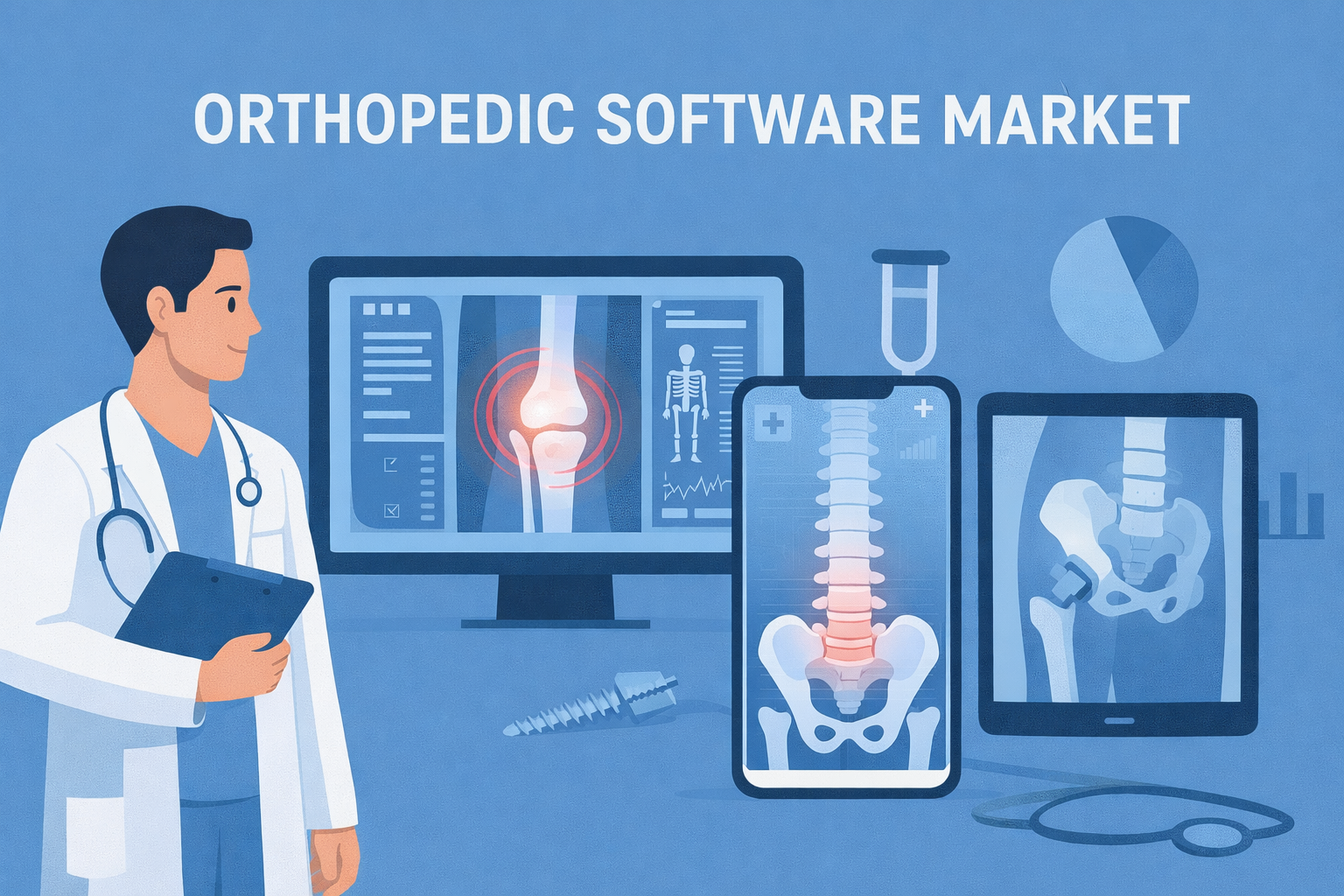
The global orthopedic software market, once a niche segment of healthcare IT, is undergoing a profound transformation, driven by a potent mix of strategic consolidation, technological leaps, and an unwavering demand for surgical precision and operational efficiency. As hospitals and ambulatory surgical centers grapple with rising caseloads of knee and hip replacements, alongside increasing pressure to improve patient outcomes and streamline costs, digital solutions are moving from optional aids to essential infrastructure. This surge is catalyzing a wave of mergers and acquisitions, as major med-tech players and ambitious software firms jockey for position in a high-growth arena.
The market’s robust health is quantified by recent analysis. According to SNS Insider, The Orthopedic Software Market Size was valued at USD 384.2 million in 2023 and is expected to reach USD 710.2 million by 2032, growing at a Compound Annual Growth Rate (CAGR) of 7.1% over the forecast period 2024-2032. This projected near-doubling of market value underscores the critical role software now plays across the orthopedic care continuum—from preoperative planning and intraoperative guidance to postoperative recovery and long-term implant monitoring.
The most visible trend electrifying the sector is a relentless wave of mergers and acquisitions. Established medical device giants, recognizing that the future of orthopedics is digitally integrated, are aggressively acquiring specialized software firms to build comprehensive ecosystems. The strategic playbook is clear: bundle cutting-edge software with implant portfolios to create locked-in, value-added solutions for surgeons. This not only drives implant sales but also establishes new, recurring revenue streams from software licenses and service agreements.
A landmark deal that set the tone occurred in late 2022 when Stryker Corporation completed its acquisition of Vocera Communications, a move that, while broader than orthopedics, highlighted the emphasis on seamless clinical communication and workflow. More directly, Zimmer Biomet’s continued expansion of its ROSA® Robotics ecosystem—backed by sophisticated planning software—and Smith & Nephew’s strategic acquisitions in the sports medicine and surgical visualization spaces exemplify the vertical integration model. For smaller, agile pure-play software companies, this environment presents a dual opportunity: either innovate rapidly to become an attractive acquisition target or carve out a dominant position in a specific sub-segment, such as outpatient total joint arthroplasty or value-based care analytics.
Beyond consolidation, the technological vanguard of the market is defined by the integration of Artificial Intelligence (AI) and Machine Learning (ML). AI-powered software is revolutionizing preoperative planning by analyzing 3D patient anatomy from CT scans to predict optimal implant size, positioning, and alignment with unprecedented speed and accuracy. Companies like Corin Group with its Optimized Positioning System (OPS™) and Think Surgical with its TPLAN™ are pushing the boundaries, offering data-driven insights that surpass traditional, manual planning methods. This translates to shorter operative times, reduced risk of revision surgery, and highly personalized patient care.
Furthermore, the rise of cloud-based platforms is breaking down data silos. Surgeons can now access patient plans and collaborate with peers from any location, while hospitals gain powerful tools for analyzing aggregate data to improve surgical protocols, manage inventory, and demonstrate cost-effectiveness to payers. The pandemic acted as a significant accelerant for this shift to the cloud, proving the necessity of remote access and interoperability.
Top Players and Competitive Dynamics:
The competitive landscape is a fascinating blend of diversified titans and focused innovators. The undisputed top players leveraging vast sales networks and extensive R&D budgets include:
- Stryker Corporation (Mako Surgical): A dominant force, its Mako robotic-arm assisted surgery system is synonymous with robotic orthopedics, heavily reliant on its proprietary planning software for joint replacement.
- Zimmer Biomet Holdings, Inc.: With its ROSA® Robotics platform and the Signature ONE™ personalized planning system, Zimmer Biomet offers a deeply integrated digital suite across knee, hip, and spine procedures.
- Medtronic plc: A powerhouse in spinal solutions, its Mazor X robotic guidance system and StealthStation™ navigation software represent a formidable presence in the complex spine surgery segment.
- Smith & Nephew plc: Focused on enabling precision in sports medicine and reconstruction, its CORI® surgical system highlights the trend towards smaller, more portable robotic and software solutions.
Challenging these incumbents are pure-play software and analytics firms like Arthrex (with its surgiligence platform), Brainlab (a leader in anatomy-independent surgical navigation), and Episurf Medical, which specializes in patient-specific, minimally invasive solutions. Their agility and deep specialization make them key innovators and attractive partners or acquisition targets.
Looking Ahead: Challenges and the Road to 2032
The path to the projected $710.2 million market is not without hurdles. High capital costs for robotic and advanced software systems remain a barrier for smaller clinics, though cloud-based SaaS models are helping to democratize access. Data security and privacy concerns in an increasingly connected environment are paramount, requiring robust cybersecurity investments. Additionally, the industry faces the ongoing challenge of proving not just clinical efficacy but also a clear return on investment in an era of value-based healthcare.
Nevertheless, the momentum is undeniable. The convergence of demographic trends (an aging, active population), surgical innovation, and digital transformation creates a perfect growth storm. As AI algorithms become more refined, as augmented reality tools enter the operating room, and as predictive analytics move into postoperative care, orthopedic software will cease to be merely a “market” and will instead become the foundational nervous system for modern musculoskeletal care. The frenetic M&A activity and relentless R&D investments today are clear indicators that the industry’s leaders are betting billions on precisely that future.