












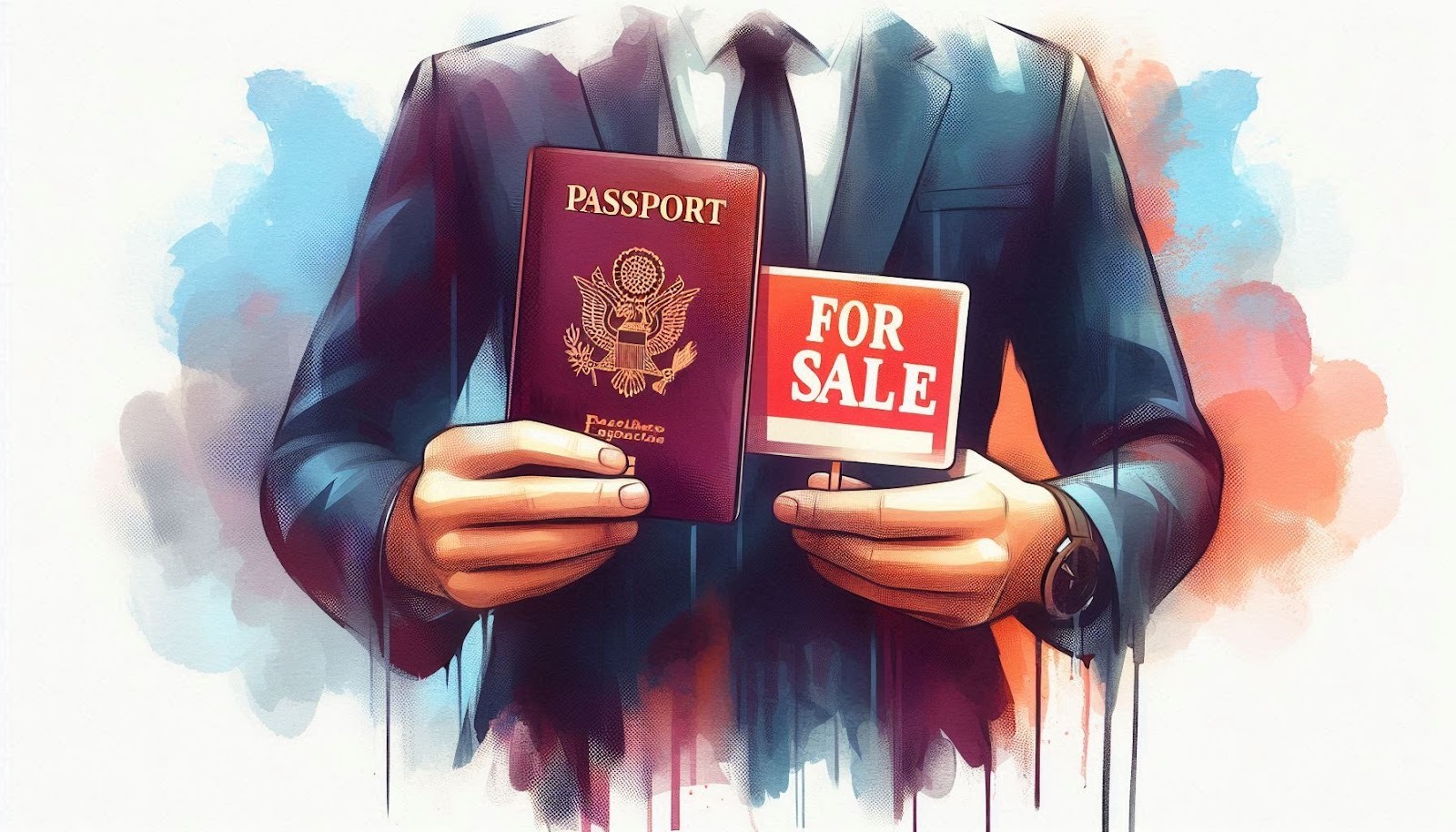
Fraudsters are pairing invented diplomatic roles with passport promises, leaving buyers exposed to arrest, deportation, and financial loss.
WASHINGTON, DC.
The scam usually begins with a flattering title.
Not a passport.
A buyer is told he may qualify as a special envoy, trade representative, diplomatic adviser, humanitarian delegate, or international liaison. The wording changes, but the structure is familiar. A broker claims to have access to a ministry. An intermediary says a small state is open to creative appointments. A consultant explains that once the role is arranged, the passport, or something very close to it, can follow.
That is what makes the new diplomatic passport scam feel more convincing than the old one. It does not always begin with an obvious fake document. It begins with the promise of status.
In 2026, investigators are paying closer attention to schemes built around fake envoy titles because the model is effective, expensive, and potentially devastating for buyers who mistake official-sounding language for lawful diplomatic standing. What is being sold in many of these cases is not a real diplomatic function. It is a story about access, protection, and prestige that can collapse the moment a border officer, foreign ministry, bank, or prosecutor asks for proof.
That collapse can be brutal.
A client who believed he bought a discreet appointment may instead face document fraud questions. A traveler who thought he had special status may be detained, refused entry, or removed. A person who used the title in a visa, banking, or business context may trigger allegations of misrepresentation. By the time the buyer understands that the role was hollow, the money is often gone, and the legal exposure is very real.
The reason the scam keeps spreading is simple. Fake envoy titles feel plausible.
Most people know almost nothing about how diplomatic appointments actually work. They know the vocabulary, envoy, consul, representative, attaché, but not the legal architecture behind the words. That ignorance is the opening fraudsters exploit. They borrow just enough from real diplomacy to make the offer sound respectable. The title sounds official. The explanation sounds technical. The secrecy sounds elite. The client is made to feel he has found a narrow back channel rather than a crude fraud.
That is exactly why these scams are dangerous.
A real diplomatic role is supposed to exist within a government system. There is meant to be an appointing authority, an official purpose, and a chain of recognition that gives the status meaning beyond the paper itself. The title is not supposed to float freely in the market. It is supposed to be attached to a state function. When a private broker starts marketing that kind of role to a paying client, the first question should not be whether the title sounds impressive. It should be whether any real authority would recognize it once tested.
That is where the market usually begins to fall apart.
One of the clearest official guideposts comes from how the Government of Canada describes official passports, making clear that diplomatic and special passports are meant for official business, not as personal advantage tools or status accessories. That matters because the scam economy is built on the opposite message. It sells the passport, or the promise of one, as a private benefit. It suggests that with the right title, the buyer can move more smoothly, answer fewer questions, and occupy a category above ordinary scrutiny. The farther that promise moves from official business, the more suspect it becomes.
The same misunderstanding drives the immunity myth. Sellers rarely say in one blunt sentence that the buyer will become untouchable. They do something subtler. They hint. They suggest an easier passage. Better treatment. Fewer complications. Quiet influence. The implication is that the title plus the passport equals protection. Serious analysis says otherwise. As Amicus International Consulting explains in its review of diplomatic passports and immunity, the passport itself does not automatically create immunity, because immunity depends on recognized status and host state accreditation. That distinction is the legal tripwire hidden inside almost every fake envoy pitch. The document and the title may impress a buyer, but they do not force another government to treat the holder as protected.
Once that point is understood, the scam becomes easier to see.
The fake envoy title is not really the benefit. It is the wrapper.
It gives the broker a cleaner story than a straight passport sale. He can claim he is not selling documents at all. He is only facilitating an appointment. He can say the client is being considered for public service. He can claim the passport would merely reflect the role, not constitute the product. This sounds more sophisticated than a for sale listing on a dark website. It also gives the seller room to retreat if challenged. The title was real, he may say. The passport was never guaranteed. Recognition was never promised. The problem, in other words, becomes the client’s misunderstanding.
That is convenient for everyone except the client.
Because what the client often paid for was not public service but private advantage. He wanted smoother movement, a higher status profile, or a Plan B in a world that feels more monitored and less forgiving. Some buyers want prestige. Some want relief from ordinary bureaucracy. Some want to create distance from legal, commercial, or reputational problems. Fraudsters understand all of those motives. They do not market paperwork. They market exceptional treatment.
That is why the process is usually draped in mystique.
The intermediary says the opening is limited. The state must remain unnamed until funds are committed. The ministry contact is sensitive. The title must be handled discreetly. Payment is divided into stages. Supporting paperwork appears slowly. Every delay is framed as proof that the process is delicate and real. In truth, the uncertainty is often the product. It keeps the client hopeful long enough to continue paying.
The documentary side of these schemes is not always simple forgery. That is what makes them harder to spot. A widely read Reuters account of the Boris Becker passport dispute showed how quickly officials can challenge a passport tied to a claimed envoy role once basic questions start being asked. That episode mattered because it exposed the fragile structure behind glamorous titles. A role that sounded impressive in theory became a subject of open dispute once real authorities started looking closely. That is the pattern fraud investigators keep seeing. The title holds up in the pitch. It fails under verification.
The damage to buyers can be severe even before prosecutors become involved.
Arrest is one risk, particularly if a forged or altered document is presented or if false status claims are used in a legally meaningful setting. Deportation or refusal of entry is another, because border officials are not required to accept diplomatic theater at face value. Financial loss is almost guaranteed in many cases, since the fees are often paid upfront through intermediaries who become harder to locate once the client starts demanding specifics. Reputational damage can follow as well, especially if the buyer has already used the title publicly or attached it to business dealings.
And there is an even broader consequence. Every fake envoy deal weakens trust in the legitimate system.
Real diplomats, official representatives, and lawful document holders depend on states trusting the credentials they present. When fraudsters turn envoy language into a sales tool, they do more than scam individuals. They put pressure on the credibility of official appointments themselves. Governments respond by tightening checks, asking harder questions, and scrutinizing documents more aggressively. That means the fallout spreads beyond the immediate victim.
The scam thrives because it sits between two worlds.
It borrows the aesthetics of the real one, ministries, protocol, credentials, international language, and mixes them with the incentives of the fake one, secrecy, urgency, money, and vague promises. The buyer sees the polished surface and assumes the harder legal questions must have been solved somewhere in the background. In reality, those questions are often the very ones the seller is praying no one asks.
What ministry appointed you?
For what mission?
Under what authority?
Recognized by whom?
With what legal effect?
Used for what official purpose?
If a role cannot answer those questions cleanly, it is not a loophole. It is a liability.
That is the blunt truth behind the new diplomatic passport scam. It is new only in packaging. The core deception is old. Someone is selling the appearance of public authority to a private buyer who wants more than ordinary law is willing to give him. The fake envoy title simply makes the transaction feel more respectable.
But respectability is not recognition.
And recognition is what matters when the passport is checked, the title is questioned, or the money trail lands on an investigator’s desk.
The safest conclusion is also the least glamorous one. Money can buy introductions, stories, stationery, and in some cases even official-looking paper. What it cannot reliably buy is the legal legitimacy that makes diplomatic status real. When a fraudster offers that legitimacy through an invented envoy title, the buyer is not purchasing protection.
He is often purchasing exposure.