












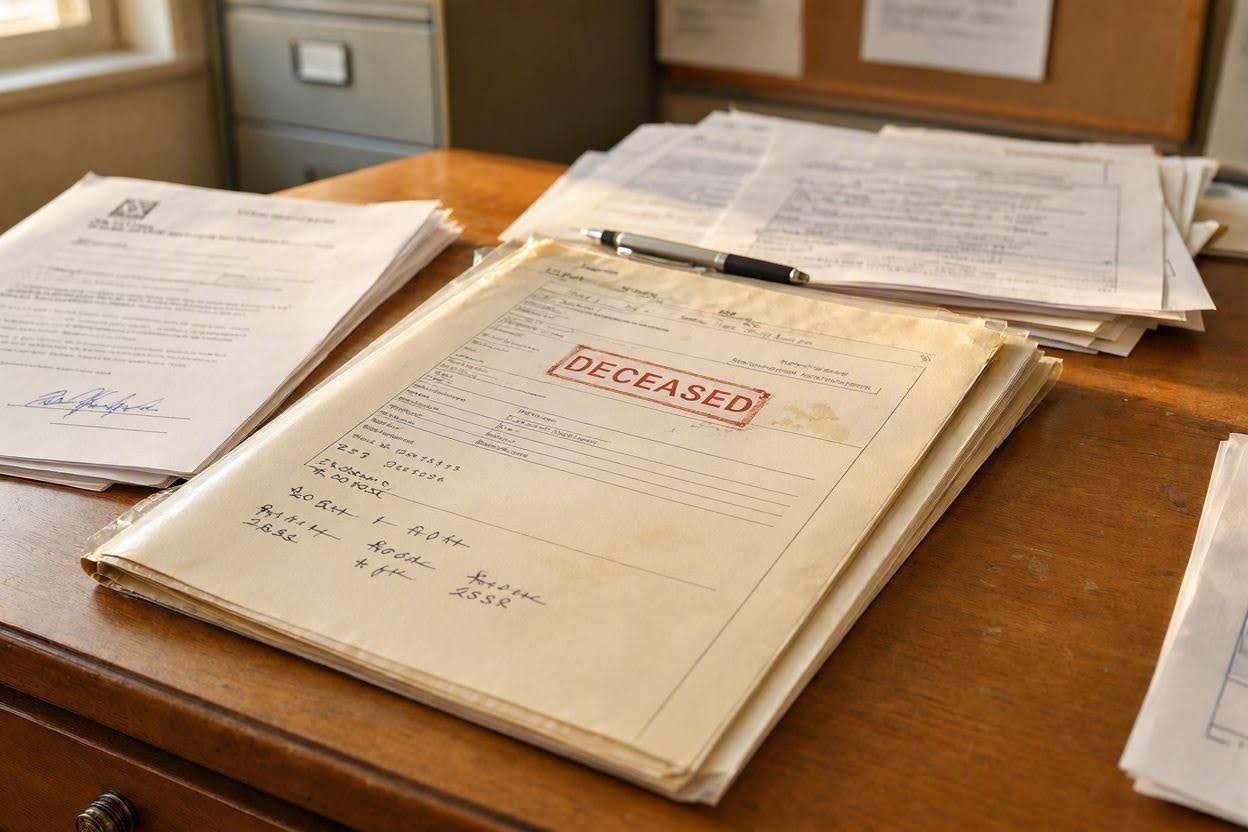
Federal prosecutors say Oren David Shachar directed the creation of false electronic medical records and retroactive hospice paperwork so Medicare would pay for end-of-life services supposedly delivered before recently identified beneficiaries had died.
WASHINGTON, DC — Federal prosecutors allege that a Southern California hospice operator converted recorded deaths into apparently legitimate Medicare episodes by rebuilding patient timelines after death, then assigning evaluations, terminal diagnoses, enrollment dates, and billable services to earlier periods when beneficiaries were still alive.
The allegations appear in a 16-count federal indictment charging Oren David Shachar, Jeannie Choi, and Abraham Shin with healthcare fraud conspiracy and related offenses arising from an alleged operation that submitted approximately $27,731,000 in challenged hospice claims between February 2021 and March 2026.
Medicare allegedly paid approximately $26,908,000 to four companies associated with Shachar, although prosecutors do not attribute that entire amount solely to deceased beneficiaries, because the wider case also concerns living patients who were allegedly ineligible, improperly recruited, or retained through inducements.
Every accusation remains unproven, each defendant is presumed innocent unless convicted beyond a reasonable doubt, and the indictment describes the government’s theory of disputed events rather than conclusions reached after evidence has been authenticated, witnesses have been questioned, or jurors have deliberated.
A Patient Timeline Allegedly Written in Reverse
The government’s federal indictment detailing the alleged hospice scheme says Shachar directed a nurse, a physician identified only as Physician 2, and others to create false, backdated electronic records after deceased Medicare beneficiaries had been selected for purported enrollment.
Those records allegedly stated that a nurse had seen and evaluated each beneficiary while that person remained alive, while a physician supposedly certified a terminal prognosis that would support Medicare hospice eligibility before the beneficiary’s actual date and time of death.
Prosecutors further allege that Shachar purported to enroll deceased beneficiaries into hospice service beginning before death, thereby presenting Medicare with a chronological narrative in which the provider appeared to admit an eligible terminal patient and furnish covered care during the person’s final days.
The allegation differs sharply from an ordinary claim submitted after someone dies, because healthcare providers routinely bill after services are completed, while the charged theory concerns records allegedly created later to represent encounters, certifications, elections, and care that prosecutors contend never happened as documented.
How Real Details Could Support an Allegedly False History
According to prosecutors, Choi obtained access to identifying information through her employment at an unnamed California-licensed funeral business, then she and Shin allegedly transmitted names, Social Security numbers, birth dates, Medicare identifiers, identification images, physician details, and next-of-kin information to Shachar.
The indictment says Shachar first determined whether a deceased person had been enrolled in Medicare and could have received hospice coverage while alive, a screening step that allegedly helped ensure the reconstructed episode involved an authentic beneficiary with plausible federal insurance eligibility.
Shachar, a nurse working for him, or Choi would then allegedly meet surviving relatives at the funeral business or contact them by telephone, collecting personal health information that could place genuine diagnoses, symptoms, hospitalizations, and family observations inside the purported hospice file.
Office employees also allegedly requested records from the deceased person’s recent hospital visits, meaning prosecutors believe legitimate clinical history was combined with false dates and invented encounters rather than replaced by a wholly fictional patient, illness, physician, or death.
That blend of authentic and allegedly fabricated information matters because a claim can appear internally credible when the beneficiary number is valid, the medical history is recognizable, the death is real, and only the timing or provenance of crucial hospice documents has been manipulated.
Why Exact Death Times Allegedly Mattered
Prosecutors say Shachar insisted that the funeral business maintain accurate records showing each proposed beneficiary’s date and precise time of death, information he allegedly needed to prepare his own chronology and arrange a later meeting with the person’s next of kin.
An exact timestamp could establish the outer boundary for every purported service, certification, and enrollment event, allowing anyone constructing a false clinical history to place each entry before death while avoiding the obvious impossibility of documenting care after the beneficiary had already died.
The government also alleges that only people who died at home, rather than in a hospital or another institution, would be accepted through this referral channel, a condition that could reduce conflict with facility records created by independent clinicians and administrators.
Another alleged rule required death within five days after a marketer contacted Shachar, creating a narrow interval in which fresh identifying information, recent hospital records, family access, and a fixed death time could be assembled into a purportedly coherent pre-death hospice episode.
Prosecutors additionally say the deceased person could not have been receiving hospice from another provider when death occurred, because an existing enrollment would create an immediate contradiction within Medicare systems and potentially expose overlapping claims, competing records, or calls from the legitimate hospice.
Backdating Allegedly Served a Statistical Purpose
The indictment says false deceased-patient episodes were intended partly to conceal an unusually high live-discharge rate, which can arise when many beneficiaries leave hospice alive and may indicate that a provider repeatedly enrolled people whose conditions did not support a terminal prognosis.
By making it appear that additional patients died while receiving hospice services, prosecutors contend, the reconstructed files could make the companies’ overall results resemble authentic end-of-life care and counterbalance living beneficiaries who remained enrolled unusually long or later departed alive.
The government further alleges that deceased enrollments helped offset the effect of Medicare’s annual per-patient spending limitation, giving each backdated episode a potential financial and statistical value beyond any reimbursement that could be generated from the individual beneficiary’s purported final days.
This theory places data analytics near the center of the case, because prosecutors are not merely alleging isolated false charts but a coordinated effort to alter the population-level patterns that Medicare contractors and investigators might examine when deciding whether a hospice deserves scrutiny.
Patterns involving length of stay, place of death, discharge status, referral source, claim timing, and late-created documentation can become more revealing when compared across related providers, particularly when multiple companies share owners, workers, clinicians, marketers, or financial relationships.
What Legitimate Hospice Enrollment Requires
Medicare hospice coverage generally depends upon physician certification that a beneficiary is terminally ill, ordinarily meaning a life expectancy of six months or less if the illness follows its normal course, alongside an informed election choosing comfort-focused hospice care for the terminal condition.
That election is consequential rather than ceremonial because a beneficiary may forgo Medicare payment for certain curative treatment related to the terminal illness while receiving palliative nursing, medication, equipment, counseling, therapy, social services, and other covered support through the hospice benefit.
Initial coverage generally consists of two 90-day benefit periods, followed by renewable 60-day periods, while continued eligibility requires recurring certification and, at specified stages, a face-to-face assessment by an authorized hospice physician or nurse practitioner to support the ongoing prognosis.
A defensible claim therefore depends upon more than a correct name and Medicare number, because it implicitly relies on a genuine clinical evaluation, qualified certification, informed election, accurate service dates, truthful provider information, medically necessary care, and documentation created through authorized processes.
The indictment alleges that essential safeguards were inverted, with a real death used to validate an invented terminal-care narrative instead of a real terminal prognosis leading prospectively to hospice enrollment, family counseling, palliative treatment, and claims reflecting services actually furnished.
Relatives Allegedly Entered the Process After Death
The government says surviving relatives were approached at the funeral business or contacted by telephone after Shachar had assessed whether the deceased person’s Medicare status and medical history could support a purported hospice episode, placing family participation late within the alleged workflow.
Those relatives were allegedly asked for health details and signatures on hospice enrollment paperwork, yet the indictment does not publicly explain what every family member was told, whether documents displayed earlier dates, or whether signers understood how their information would be used.
Bereaved families routinely face unfamiliar forms related to funeral arrangements, insurance, hospitals, estates, transportation, and benefits, so a request that appears administrative may not immediately signal that someone is assembling a retroactive medical record or seeking payment for services never recognized by relatives.
Family testimony may consequently become important at trial, because relatives could address when the first hospice contact occurred, whether any nurse visited before death, whether a physician discussed terminal eligibility, whether the beneficiary knowingly elected hospice, and which documents appeared afterward.
Defense lawyers may test memory, authorization, language, document presentation, or employee conduct in each encounter, while prosecutors must connect particular family interactions to specific records and claims rather than relying solely on the emotional force of an allegation involving grieving relatives.
Payments Allegedly Put a Price on Completed Deaths
Shachar allegedly paid Choi and Shin between at least $1,000 and $3,000 for each deceased beneficiary referral ultimately enrolled, compensation exceeding the separate amounts described for some living referrals and reflecting the distinctive billing value prosecutors attribute to already completed deaths.
For living beneficiaries, the indictment says marketers sometimes received approximately $700 for every month that a referred patient remained billed to Medicare, while beneficiaries themselves allegedly received cash, groceries, alcohol, televisions, massages, furniture, equipment, or personal-care supplies to remain enrolled.
Some living beneficiaries were allegedly offered another $100 or $200 for referring additional people, creating a layered recruitment structure in which patients, marketers, and operators could receive different rewards tied to enrollment, retention, referral volume, or the availability of usable personal information.
The deceased-person channel was structurally different because no beneficiary could consent, complain, notice unfamiliar services, or leave hospice alive, making relatives, funeral records, hospital histories, clinician credentials, and carefully arranged dates central to the appearance of a valid claim.
An Amicus International Consulting analysis of identity-change methods that can lead to arrest explains why taking information associated with a deceased person constitutes unlawful appropriation, thereby sharply distinguishing stolen identity data from authorized records created through legitimate legal procedures.
Four Companies and Nearly $27 Million Paid
Prosecutors collectively describe Gentle Touch Hospice Care in Valley Glen, Oxford Hospice Care in Montclair, Art of Hospice in Encino, and Holly Trinity Hospice in Glendale as the Shachar Hospices, although each company possessed its own corporate identity and Medicare relationship.
The alleged conspiracy extended from no later than February 2021 through at least March 2026, while Shin allegedly participated beginning no later than March 2025 and Choi allegedly joined no later than May 2025, continuing through at least November 2025.
Across the broader operation, prosecutors say the four companies submitted approximately $27,731,000 for services that were medically unnecessary, ineligible for reimbursement, not furnished as represented, or procured through kickbacks, with Medicare paying approximately $26,908,000 on those challenged claims.
Those totals should not be described as money paid entirely for deceased beneficiaries, because counts and narrative allegations encompass several asserted methods, including living patients who were not terminally ill, misleading enrollment explanations, beneficiary inducements, referral payments, and backdated deceased-patient files.
Local FOX 11 reported on the Southern California hospice case, placing the Shachar allegations within the wider 2026 enforcement action, while noting that authorities had not disclosed the full identities of the affected deceased beneficiaries or established the full extent of funeral-industry involvement.
The Specific Counts Behind the Broader Narrative
Count one charges all three defendants with conspiracy to commit healthcare fraud, while counts two through nine identify particular alleged executions involving claims submitted through the four hospices between August 2023 and November 2025, with responsibility allocated differently across defendants and dates.
Counts ten through twelve charge aggravated identity theft involving three deceased beneficiaries identified publicly only by initials, alleging that the defendants knowingly transferred, possessed, or used names, Social Security numbers, and Medicare identifiers without lawful authority during charged healthcare fraud offenses.
The remaining counts include an alleged transaction involving $15,000 in criminally derived property toward a Rolls-Royce Phantom arrangement, two alleged $300 referral payments, and an accusation that Shachar sold nine Medicare beneficiary identifiers to an unnamed physician for $12,500.
Each offense requires proof of distinct statutory elements; for example, evidence that a medical record was inaccurate would not automatically prove knowing identity theft, a prohibited kickback, a qualifying monetary transaction, or intentional participation by every defendant throughout the alleged conspiracy.
Aggravated identity theft is particularly consequential because prosecutors must establish knowing use of an actual person’s means of identification without lawful authority during a qualifying felony, while any conviction can carry punishment separate from the sentence imposed for underlying healthcare fraud.
Electronic Records Can Reveal When History Was Rewritten
Although a clinical note displays a service date, electronic systems can preserve metadata showing when the entry was created, modified, signed, imported, or accessed, potentially allowing investigators to compare the represented encounter with the record’s actual technical history and the beneficiary’s death certificate.
Device extractions and account records may also show who transmitted identification images, when relatives were contacted, when hospital charts were requested, which user entered a terminal certification, and whether payments were processed after a deceased beneficiary appeared in billing systems.
Prosecutors may seek to combine that digital chronology with texts, WhatsApp messages, telephone records, clinician testimony, employee accounts, bank transfers, claim files, corporate documents, and family recollections to argue that recurring backdating was intentional rather than an administrative correction.
Defense counsel can challenge authorship, shared logins, automated timestamps, record migrations, witness reliability, medical eligibility, or the meaning of payments, and ask whether employees or clinicians acted beyond instructions and whether Shachar knew how particular entries were produced.
The central evidentiary question will therefore involve more than whether a note carried an earlier date, because jurors may need to determine who created it, who understood it was false, who caused Medicare billing, and whether each defendant knowingly joined the alleged plan.
Why Authentic Identifiers Can Defeat Routine Screening
Healthcare payment systems are designed to reject missing or structurally invalid information, but a deceased beneficiary’s genuine name, valid Medicare identifier, real physician relationship, authentic hospital history, and accurate death record can make an allegedly manufactured episode appear technically complete during initial processing.
The stronger warning signs may emerge only after comparing separate datasets, including the note-creation timestamp, death registry, place of death, prior hospice status, family contact date, clinician schedule, electronic signature history, referral payment, and the provider’s broader discharge patterns.
This is why access to funeral information can carry unusual risk, since the business may hold the exact facts needed to establish identity, insurance status, death chronology, medical contacts, and reachable relatives at a moment when the individual can no longer personally detect misuse.
Hospices and funeral providers can reduce exposure by limiting access to records according to job responsibilities, auditing unusual searches and exports, restricting transmission via personal messaging applications, preserving signature provenance, and escalating post-death requests that fall outside ordinary administrative needs.
Medicare contractors can similarly examine implausibly late documentation, clusters of home deaths, repeated five-day windows, overlapping personnel, unusually high live-discharge rates, and sudden changes in patient outcomes, while ensuring that data-driven scrutiny does not automatically presume misconduct by legitimate providers.
Identity Continuity Separates Lawful Change from Theft
The alleged conduct demonstrates that identity fraud does not always require impersonating someone in daily life, because a genuine identifier can be inserted into a short-lived medical narrative and monetized through institutional systems without creating a complete social, financial, or travel persona.
By contrast, lawful identity changes depend on authorization, government recognition, accurate supporting records, and continuity between the person and the newly issued credentials, rather than on secretly transferring someone else’s identifiers or manufacturing events that never occurred in another person’s history.
Amicus International Consulting’s discussion of second passports and legally recognized identity pathways emphasizes the distinction between government-authorized status and identity theft, a distinction that becomes especially clear when real personal data is allegedly reused without consent in federal healthcare claims.
That distinction also matters for public understanding, because phrases such as alternate identity, changed identity, and new identity can describe lawful court or citizenship processes, whereas prosecutors in this case allege unauthorized use of deceased people’s existing Social Security and Medicare identifiers.
A National Crackdown Does Not Decide Individual Guilt
The Shachar indictment was announced during the 2026 National Health Care Fraud Takedown, which federal authorities described as involving 455 defendants, including 90 physicians and other licensed professionals, and more than $6,500,000,000 in alleged false claims across numerous jurisdictions.
Authorities also reported substantial asset seizures, provider suspensions, and billing privilege revocations during the coordinated action, demonstrating how criminal, civil, and administrative responses can proceed simultaneously, even though charges against individual defendants remain unresolved and require separate proof in court.
The nationwide figures provide context for enforcement but cannot establish that any particular Shachar Hospice claim was false, that any named beneficiary was ineligible, or that Shachar, Choi, or Shin possessed the knowledge and intent required for each charged offense.
Prosecutors must instead prove their case through admissible evidence tied to individual transactions, while defense counsel may contest whether services were medically reasonable, records were knowingly false, payments were unlawful, identifiers lacked authorization, or alleged participants understood the complete purpose of disputed activity.
What the Backdating Allegation Ultimately Tests
The case presents a direct test of whether Medicare can trust the chronology embedded in electronic healthcare records, because payment systems depend upon the assumption that documented assessments, certifications, elections, and service dates describe events that occurred when the record says they occurred.
It also tests whether families can trust professionals seeking sensitive information after a death, since prosecutors allege that grief, authentic medical history, and accurate death records became inputs for paperwork portraying an end-of-life relationship that relatives may never have witnessed.
For legitimate hospice providers, the allegations threaten broader confidence in an essential benefit that supports patients and families through serious illness, making it important to distinguish an accused network from compliant organizations delivering nursing, symptom control, counseling, equipment, and compassionate care.
For the defendants, the vividness of post-death backdating allegations cannot diminish the government’s burden, and responsible coverage must maintain the distinction between a detailed indictment and a verdict reached after witnesses, records, expert opinions, and competing explanations undergo adversarial examination.
Until the charges are resolved through dismissal, pleas, trial, or later proceedings, the case remains an allegation that Shachar and others used real deaths to manufacture earlier hospice histories, causing Medicare to pay for care that prosecutors say existed on paper rather than in patients’ lives.
For more coverage on this topic, see related articles on our publishing site.