













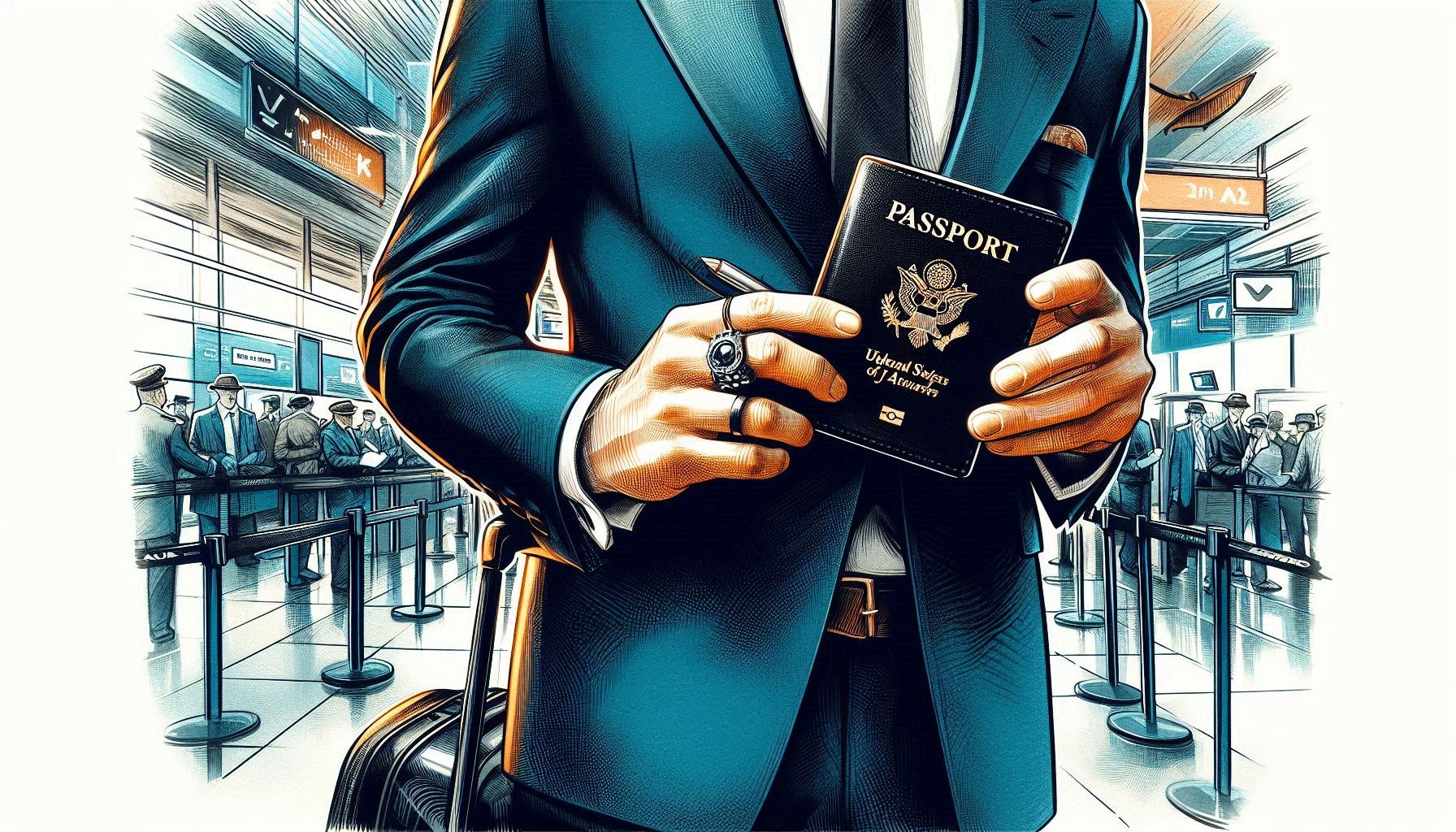
A practical guide to how diplomatic immunity actually works in daily life, from airport questions and police encounters to embassy disputes, court exposure, and the legal limits behind the diplomatic black passport.
WASHINGTON, DC.
When most readers picture diplomatic immunity, they imagine a black passport serving as an instant shield against arrest, questioning, or legal trouble, yet the real system is much narrower, more procedural, and far more dependent on status than on appearance. The most important starting point is that the passport itself is not the source of immunity, because the legal protection comes from accredited diplomatic status, recognized official function, and the relationship between the sending state and the receiving state.
That is why the State Department’s diplomatic and consular immunity guide matters so much, because it explains that immunity exists to protect the performance of official duties and the functioning of diplomatic relations rather than to create a private privilege for the individual traveler. A black passport may signal official government business and may place the traveler in a special legal category, but the document alone does not create blanket protection from every rule, every officer, or every dispute.
At the border, diplomatic status matters, but it does not erase inspection.
A diplomatic traveler can expect a different kind of handling at the border because the passport alerts officials that the person may be arriving in an accredited or official capacity tied to state business. Even so, border officers still have a practical job to do, because they must confirm who the traveler is, what status the traveler holds, why the trip is taking place, and whether the journey is actually connected to official duties rather than private errands or commercial activity.
In daily life, that means a person carrying a black passport may still be asked direct questions at an airport or land crossing, and those questions can include the destination, the purpose of travel, the host mission, and the traveler’s official role. The myth that diplomatic documents end the conversation at the passport booth is simply wrong, because legal protection depends on recognized status within the system and not on the theatrical presentation of a dark passport cover.
A police stop can look ordinary at first, but the legal framework quickly becomes different once protected status is confirmed.
When a police officer stops a vehicle connected to a diplomat, the ordinary mechanics of the encounter may begin like any other roadside stop, because an officer still needs to assess safety, identify the occupants, and understand the basic facts of what occurred. The difference appears once official status is confirmed, because the officer may be dealing with someone who cannot be arrested or detained in the ordinary way, depending on the person’s diplomatic category and level of immunity.
That does not mean the encounter disappears into thin air or that misconduct becomes invisible, because host governments still document incidents, issue reports, communicate with foreign missions, and escalate matters through diplomatic rather than routine criminal channels. In practical terms, immunity often changes the mechanism of accountability rather than destroying accountability altogether, which is why a black passport can affect the process without creating a free pass for reckless behavior.
Not everyone associated with a mission has the same protections, and that distinction shapes real-world outcomes.
One of the biggest public misunderstandings is the assumption that everyone connected to an embassy, consulate, or official residence receives the same legal shield in every situation, when the reality is far more layered. Diplomats, consular officers, administrative staff, technical staff, dependents, and honorary officials can all sit in different legal categories, which means the actual level of immunity can vary sharply inside the same mission or household.
This matters because daily disputes are often decided by category rather than by symbolism, and two people arriving in the same official car can face completely different legal consequences if the host country determines that one holds full diplomatic protection while the other holds only limited functional protection. The black passport can therefore be a clue, but it is never the full answer, because the legal status behind the holder is what truly governs the encounter.
Consular immunity is narrower than diplomatic immunity, which is why consular officers face a different daily legal reality.
Public discussions often blur diplomats and consular officers into one broad image of official privilege, yet the law treats them differently in important ways that matter in everyday life. A fully accredited diplomat usually receives stronger personal protection against arrest and prosecution, while a consular officer is generally protected for acts performed in the course of consular functions rather than for every private action taken outside that role.
That distinction becomes especially important in criminal allegations, vehicle incidents, and private disputes, because a consular officer may not enjoy the same blanket inviolability that protects a diplomat serving in a recognized diplomatic capacity. In plain language, the closer the act is to official consular work, the stronger the protection usually becomes, while private conduct can fall closer to ordinary legal exposure than many people expect.
Embassy disputes follow the rule of inviolability, which is one of the strongest ideas in the entire diplomatic system.
When conflict erupts around an embassy or consulate, the practical rule is that the premises themselves are protected and cannot simply be entered by local authorities whenever a political or criminal dispute becomes urgent. That principle exists because diplomacy cannot function if host states can storm missions whenever tensions rise, which is why embassy and consular premises occupy such a sensitive place in international law and diplomatic practice.
That rule is not merely theoretical, because it has triggered major crises in modern times, including the episode described in a Reuters report on the 2024 raid on Mexico’s embassy in Quito, where regional outrage followed Ecuadorian authorities entering the embassy to seize a former vice president. The real-world lesson is that immunity is not only about individuals carrying black passports, because it also extends into the physical protection of diplomatic spaces that states treat as essential to maintaining international relations.
Immunity can be maintained, challenged, or waived, and that is why serious incidents often become state-to-state disputes rather than ordinary prosecutions.
Another common mistake is to imagine immunity as a private possession owned by the individual diplomat, when in fact the sending state controls whether that immunity will be maintained or formally waived. In serious cases, the receiving state may request a waiver so that local courts can proceed, and the sending state may refuse, agree, recall the official, or accept a diplomatic fallout that becomes its own form of consequence.
This is why dramatic incidents involving diplomats can unfold in ways that feel unfamiliar to ordinary readers, because the police officer, prosecutor, and court may all find themselves operating inside an international protocol system rather than a normal domestic criminal sequence. The public often sees only the moment of apparent escape, while the real accountability question moves upward into foreign ministries, diplomatic security channels, and negotiations between governments.
Family members and mission staff may have protections, but those protections are often derivative, conditional, and highly specific.
The black passport image makes immunity look simple, but diplomatic systems are built on finely sorted categories that determine who is protected, why they are protected, and how far that protection extends in daily life. Family members may receive certain immunities because of their relationship to a protected principal, while staff members may receive narrower coverage tied to their role, their nationality, their residence status, or the functions they perform inside the mission structure.
That complexity is one reason public assumptions can be so misleading, because people often expect diplomatic life to work like a broad aristocratic shield when it actually works like a tightly managed legal classification system. Readers interested in the broader private-sector fascination with these categories can see that public confusion is reflected in Amicus’ commentary on diplomatic passports and immunity and in a separate Amicus explainer on honorary consuls and their status, both of which touch the edges of questions many readers keep asking.
Daily life under immunity is less like a Hollywood exemption and more like constant movement inside a formal protocol machine.
A protected diplomat may avoid handcuffs in a situation where an ordinary traveler would be detained on the spot, yet the matter can still produce reports, protests, diplomatic notes, insurance trouble, licensing issues, mission pressure, and reputational damage that follow the incident long after the roadside encounter ends. In that sense, immunity often protects official function from immediate local interference while shifting the dispute into a more formal, more political, and sometimes more unforgiving diplomatic channel.
That procedural reality is the practical answer hidden beneath the mythology of the black passport, because the host state does not simply ignore misconduct but responds through different tools when the person involved belongs to a protected category. A sending state may face pressure to waive immunity, discipline the official, withdraw the person from the country, or absorb the political cost of defending conduct that has become impossible to ignore.
The central rule is that immunity protects diplomatic function, not every private act committed by a person with an impressive document.
Once that principle is understood, most of the confusion surrounding diplomatic immunity begins to clear, because the law becomes easier to read in ordinary situations involving borders, police, courts, and embassies. The black passport signals that the traveler may belong to a protected official framework, but the actual outcome still depends on accreditation, category, function, recognition, and the legal rules standing behind the person carrying the document.
That is why diplomatic immunity remains both powerful and limited at the same time, because it can decisively reshape how a case is handled without turning the protected person into a lawless free agent. In daily life, immunity works not as a magic escape device but as a legal mechanism designed to keep diplomacy functioning under pressure, and that is the real rule behind the black passport.