













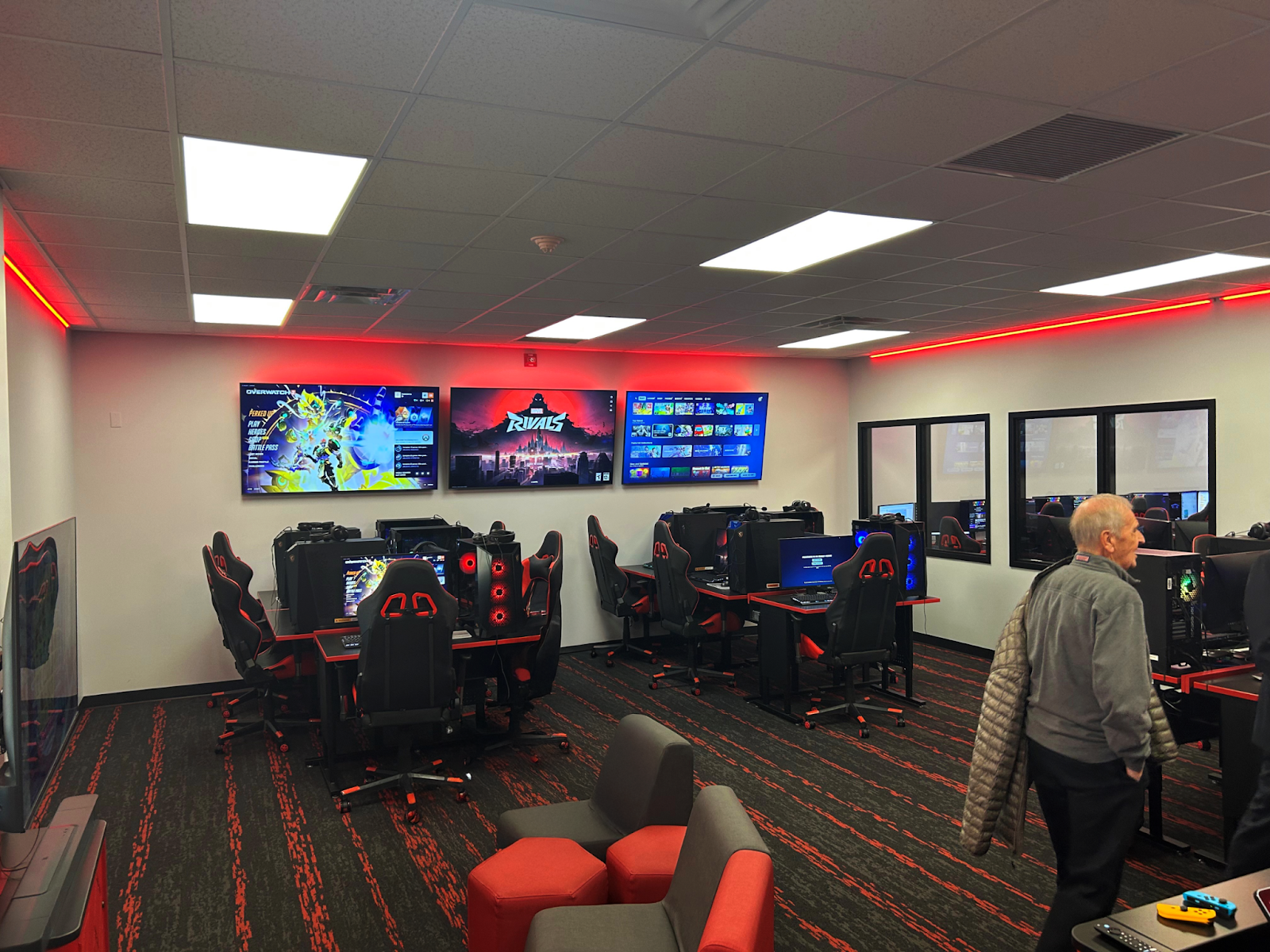
The traditional classroom, with its rows of desks and static whiteboards, is a relic. The future of learning, particularly in the unforgiving crucible of the modern workforce, demands adaptability, digital fluency, and a mastery of collaborative problem-solving. This shift is not a gradual evolution; it is a seismic cultural and technological transformation. At its epicenter, Netta Architects stands as an architect of this new educational paradigm, designing not just buildings, but dynamic ecosystems for next-generation learners. Their focus on E-Sports and Video Game Design Studios is not merely a trend-following exercise; it is a calculated investment in the infrastructure required to cultivate tomorrow’s innovators.
New York’s business landscape, perpetually driven by innovation and relentless competition, understands that the talent pipeline is paramount. The industries of tomorrow – from AI development to advanced robotics – will be populated by individuals whose foundational skills were forged in environments far more engaging and technically sophisticated than those of previous generations. Netta Architects recognizes this reality and is actively shaping it.
The Genesis of a New Educational Imperative
E-Sports, once dismissed as mere entertainment, has exploded into a multi-billion dollar global industry. Professional leagues command massive viewership, top players earn significant incomes, and the underlying infrastructure—broadcasting, event management, data analytics, and game development—represents a burgeoning economic sector. This phenomenon is not confined to entertainment; it is a powerful pedagogical tool.
Colleges and K-12 institutions are rapidly recognizing E-Sports as a legitimate extracurricular activity, a gateway to STEM fields, and a vehicle for developing critical 21st-century skills. The National Association of Collegiate Esports (NACE), founded in 2016, underscores this academic legitimization. Students engaged in E-Sports cultivate teamwork, strategic thinking, communication, and problem-solving abilities – skills highly transferable to any professional domain. Beyond the competitive arena, the ecosystem of video game design offers a direct pathway into coding, graphic design, narrative development, and project management.
This convergence of competitive gaming and academic rigor demands purpose-built environments. Standard computer labs or repurposed classrooms fall short. The future of learning requires spaces that mirror the professional demands of these nascent industries, fostering both intense individual focus and seamless team collaboration.
Netta Architects: Engineering Immersive Learning Environments
Netta Architects approaches the design of E-Sports and Video Game Design Studios not as an add-on, but as an integral component of a holistic educational strategy. Their methodology is rooted in understanding the nuanced requirements of these specialized fields, translating them into robust, technologically advanced, and psychologically optimized spaces.
The firm’s philosophy hinges on several core principles:
- Technological Integration as Fabric, Not Feature: In these next-gen learning environments, technology is not an afterthought; it is the very essence of the design. High-performance gaming requires low-latency networks, redundant power systems, and sophisticated climate control to manage heat dissipation from powerful hardware. Netta Architects engineers these facilities with industrial-grade infrastructure, ensuring uninterrupted operation and scalability for future technological advancements. This includes ample outlets, robust Wi-Fi, and the foresight to integrate emerging technologies like virtual and augmented reality.
- Ergonomics and Well-being for Peak Performance: Prolonged screen time and intense concentration demand ergonomic considerations. Netta Architects designs spaces that prioritize student comfort and health. This translates to ergonomically designed workstations with adjustable-height desks, specialized gaming chairs that provide lumbar support, and optimal monitor positioning. The goal is to minimize physical strain, allowing students to maintain focus and perform at their peak for extended periods, mirroring the demands of professional E-Sports or game development.
- Acoustics and Lighting: The Unsung Heroes of Focus: The auditory and visual environments are critical. E-Sports competitions are dynamic, with rapid-fire communication and intense sound cues. Video game design requires environments conducive to deep concentration and meticulous attention to detail. Netta Architects incorporates advanced acoustic treatments, including sound-absorbing panels and strategic room layouts, to minimize distractions and optimize sound quality. Lighting design is equally critical, utilizing adjustable and color-tunable LED systems to reduce eye strain, enhance mood, and even simulate competitive arena lighting for E-Sports events.
- Flexibility and Adaptability: Built for Evolution: The EdTech landscape is in constant flux. New games emerge, software evolves, and pedagogical approaches shift. Netta Architects designs spaces with inherent flexibility. Modular furniture, reconfigurable walls, and easily accessible utility connections allow for rapid transformation of the learning environment. A space designed for competitive E-Sports can, with minimal effort, transition into a collaborative game development lab or a presentation arena for student projects. This adaptability future-proofs the investment, ensuring the facilities remain relevant for decades.
- Experiential Learning at its Core: These studios are not merely places to consume information; they are hubs for creation, collaboration, and competition. Netta Architects designs zones that facilitate distinct learning activities:
- Competitive Arenas: Dedicated spaces for E-Sports teams to practice and compete, often with tiered seating for spectators, large displays for real-time game viewing, and integrated broadcasting capabilities for live streaming.
- Game Design Labs: Flexible workstations equipped with high-powered computers, specialized software, and collaborative whiteboarding surfaces for brainstorming, coding, and graphic design.
- Simulation & VR/AR Zones: Areas designed for immersive experiences, equipped with VR headsets, motion capture technology, and dedicated spaces for testing and developing interactive applications.
- Shoutcasting & Production Booths: Soundproofed rooms with professional-grade audio and video equipment, allowing students to learn the intricacies of broadcasting, commentary, and content creation. This provides a direct link to the media and entertainment industries.
- Community and Collaboration Spaces: Beyond individual workstations, Netta Architects integrates lounge areas, breakout rooms, and informal gathering spots. These spaces foster a sense of community, encourage spontaneous collaboration, and provide informal settings for mentorship and knowledge exchange – vital components of a thriving innovation ecosystem.
Case Studies in Architectural Foresight
While specific project names are proprietary, Netta Architects’ portfolio implicitly demonstrates their commitment to these principles. Their work with educational institutions, from K-12 to higher education, reflects a consistent understanding of how physical space impacts intellectual output. Projects that have received accolades, like those recognized by the AIA or the New Jersey Concrete Awards, are not just aesthetically pleasing; they are functionally superior, particularly in their ability to support advanced technological integration.
Consider the requirements of a cutting-edge E-Sports facility. It’s not just about rows of powerful PCs. It’s about a climate-controlled environment that prevents overheating, robust power distribution that can handle spikes in demand, sound dampening to allow clear communication among teammates, and broadcast infrastructure to share the action. Netta Architects ensures these complex systems are integrated seamlessly, often working within the constraints of existing structures or limited budgets, demonstrating their pragmatic approach to innovation.
Similarly, a video game design studio demands different, yet equally complex, considerations. Collaboration is paramount, so flexible layouts that support team-based ideation are essential. Powerful workstations for rendering and animation must be complemented by dedicated spaces for sound design and motion capture. Netta Architects’ designs consider the entire workflow of game development, creating a holistic environment that nurtures creativity and technical proficiency.
The New Jersey Advantage: A Microcosm of National Trends
New Jersey, a state with a rich history of industrial innovation, is now becoming a proving ground for the future of education. The demand for digitally literate and technically proficient graduates is accelerating across the state’s diverse economy. Netta Architects, with its deep roots and extensive experience in the region, is uniquely positioned to address this demand. Their understanding of local regulatory frameworks, coupled with their national expertise, allows for the efficient and effective delivery of these complex projects.
The firm’s recent acquisition of Asante Design Group further solidifies its position, expanding its capabilities and reach. This strategic growth reflects a proactive stance on emerging market needs, particularly in specialized architectural sectors. It signifies a firm that is not merely reacting to trends but is actively shaping the landscape of educational design.
Conclusion: Building the Mind-Ware of Tomorrow
The future of the American workforce depends on the education system’s ability to adapt. Traditional methods are insufficient for a world driven by artificial intelligence, data science, and complex digital ecosystems. E-Sports and Video Game Design Studios are not just recreational spaces; they are incubators for the skills and mindset required to thrive in this new reality.
Netta Architects, through its unwavering commitment to integrating cutting-edge technology, prioritizing user experience, and designing for inherent adaptability, is not just constructing buildings. They are constructing the very infrastructure of tomorrow’s minds. For New York businesses seeking to tap into a pipeline of truly future-ready talent, the architectural foresight displayed by Netta Architects in these specialized learning environments is a testament to their understanding of what it takes to build success, one byte, one pixel, one innovative design at a time. This is not just architecture; it is strategic investment in human capital.