












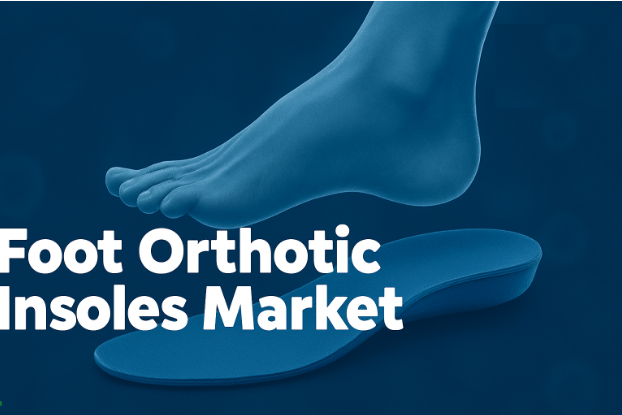
In the often-overlooked world of foot care, a quiet but fierce battle is being waged. The global foot orthotic insoles market, once a fragmented landscape of small medical device companies and podiatry clinics, is now a multi-billion dollar arena where established giants and agile innovators are clashing over a consumer base increasingly obsessed with health, wellness, and performance. From the diabetic patient seeking relief to the elite athlete chasing a marginal gain, the demand for customized support is driving an unprecedented period of consolidation, innovation, and strategic positioning.
The numbers tell a compelling story of a market on a solid growth trajectory. According to SNS Insider, The Foot Orthotic Insoles Market was valued at USD 4.03 Billion in 2024 and is projected to reach USD 6.87 Billion by 2032, growing at a compound annual growth rate (CAGR) of 6.86% from 2024 to 2032. This robust expansion is fueled by a confluence of factors: a global rise in diabetes and obesity leading to foot-related complications, a growing aging population seeking mobility solutions, and a powerful cultural shift towards proactive wellness and athletic optimization.
The Top Players and Their Battle for Supremacy
The competitive landscape is dominated by a mix of long-standing medical specialists and consumer-facing powerhouses. Companies like Bauerfeind AG, Ottobock, and DJO Global have built their reputations on clinically-backed, often physician-prescribed devices, commanding loyalty through efficacy and insurance reimbursement pathways. Their strength lies in advanced materials, rigorous biomechanical research, and deep relationships with the healthcare community.
On the other end of the spectrum, consumer brands like Superfeet and Dr. Scholl’s (a subsidiary of Kenvue Inc.) have mastered the art of retail. With their signature blue copper-infused foam or their ubiquitous “foot mapping” kiosks in drugstores, they have democratized access to orthotic support, capturing the “worried well” and the casual athlete. Their strategy hinges on brand recognition, extensive distribution networks, and marketing that speaks directly to consumer discomfort.
However, the most significant trend reshaping the industry is the blurring of lines between these two worlds. The top players are no longer content with their traditional domains; they are aggressively expanding into each other’s territories through a multi-pronged approach.
1. Mergers and Acquisitions: The Fast Track to Growth
The most direct route to market expansion has been through strategic M&A. Larger entities are acquiring smaller, innovative companies to instantly gain new technology, access different consumer segments, or eliminate a potential rival.
A prime example is the 2022 acquisition of Currex by Implus LLC (now a division of EvoShield). Currex, known for its high-performance, biomechanically engineered sport insoles popular among runners and soccer players, gave Implus a premium product to complement its more mass-market portfolio. This move allowed the combined entity to offer a solution for every athlete, from the weekend warrior to the professional, under one corporate umbrella.
Similarly, private equity has taken a keen interest in the space, seeing the stable cash flows and growth potential. Investments are being used to consolidate regional players, scale operations, and invest in R&D, further heating up the competitive environment.
2. Relentless Innovation and New Product Development
Beyond acquiring innovation, the top players are heavily investing in developing it internally. The days of a one-size-fits-all cork or gel insert are long gone. The new frontier is defined by hyper-personalization and smart technology.
Bauerfeind, for instance, has leveraged its medical heritage to develop the “Bauerfeind Body,” a digital health platform that connects patients with clinicians for remote monitoring and support, creating an ecosystem around their physical products.
Meanwhile, companies like Digitsole are pioneering the “smart insole,” embedding sensors that track steps, pressure distribution, gait patterns, and even temperature. This data, synced to a smartphone app, provides actionable insights for athletes to prevent injury and optimize performance, and for patients with chronic conditions like diabetic neuropathy to monitor foot health.
Material science is another critical battleground. The development of 3D-printed orthotics is revolutionizing customization. Companies like Aetrex Worldwide Inc. use 3D scanning and printing technology to create insoles that are perfectly contoured to an individual’s foot, offering a level of precision previously available only through expensive, multi-week podiatry lab processes. This technology is now trickling down to retail settings, making premium customization more accessible.
3. Strategic Partnerships and Channel Expansion
Recognizing that they cannot do it all alone, top players are forming strategic alliances. Medical device companies are partnering with athletic shoe manufacturers to develop co-branded, performance-focused footwear systems. Others are collaborating with telehealth platforms to offer virtual fittings and consultations, breaking down geographical barriers to expert care.
The distribution channels are also diversifying rapidly. While pharmacies and medical supply stores remain crucial, the e-commerce channel is exploding. The direct-to-consumer (D2C) model allows brands like Fulton and Tread Labs to build a direct relationship with their customers, offering personalized online quizzes and hassle-free returns to overcome the hurdle of buying insoles without trying them first.
The Road Ahead: Challenges and Opportunities
The path to 2032’s projected $6.87 billion valuation is not without its obstacles. The market faces pressures from rising raw material costs and complex, often slow-moving healthcare reimbursement systems that can hinder the adoption of advanced medical orthotics. Furthermore, the influx of low-cost, generic alternatives on e-commerce platforms poses a constant threat to brand equity and pricing power.
However, the opportunities far outweigh the challenges. The growing global middle class, particularly in Asia-Pacific regions, represents a vast, untapped market. Increased health awareness post-pandemic has consumers more invested than ever in their physical well-being, viewing quality foot support not as a luxury but as a necessity. The convergence of healthcare and wellness, powered by data and digitalization, is creating entirely new product categories and business models.
In conclusion, the foot orthotic insole market is stepping confidently into a dynamic future. The top players, through a calculated mix of mergers, groundbreaking R&D, and strategic partnerships, are not just responding to demand—they are actively shaping it. As they continue to innovate and consolidate, the ultimate winner will be the consumer, who will benefit from an unprecedented array of effective, personalized, and accessible solutions for every step they take.